What Is the Influencer and Creator Economy?
The rise of social media has changed the way people create content, build personal brands, and earn money online. Today, individuals can turn their knowledge, creativity, personality, or interests into a professional career without depending entirely on traditional media companies. This growing ecosystem is known as the Influencer and Creator Economy.
From YouTube videos and Instagram posts to podcasts, newsletters, blogs, and short-form videos, creators have more opportunities than ever to connect directly with audiences and build businesses around their content.
What Is the Creator Economy?
The creator economy refers to the digital ecosystem where independent creators produce content, build audiences, and generate income through online platforms.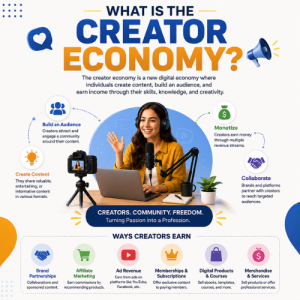
Creators can include:
- YouTubers
- Bloggers
- Social media creators
- Podcasters
- Streamers
- Photographers and videographers
- Online educators
- Newsletter writers
- Digital artists
- Coaches and consultants
Instead of working only for traditional companies or media organizations, creators can develop their own audience and monetize their skills and ideas directly.
What Is the Influencer Economy?
The influencer economy is closely connected to the creator economy but focuses more on individuals who influence the opinions, interests, and purchasing decisions of their audiences.
Influencers typically develop a strong presence on platforms such as Instagram, YouTube, Facebook, TikTok, or other social networks. Brands work with these individuals to promote products and services to targeted audiences.
For example, a fitness creator may collaborate with a sportswear company, while a beauty influencer may partner with a skincare brand.
Influencers vs. Creators: What Is the Difference?
Although the terms are often used interchangeably, there is a small difference.
Creators primarily focus on producing valuable or entertaining content and building a loyal community.
Influencers focus more heavily on their ability to affect audience opinions, preferences, and buying decisions.
However, one person can be both a creator and an influencer. A YouTuber who regularly creates educational videos and promotes relevant products, for example, may operate in both areas.
How Does the Creator Economy Work?
The creator economy generally follows a simple cycle:
Create Content → Build an Audience → Develop Trust → Monetize the Audience
Creators publish content that attracts people with similar interests. As their audience grows, they can create different income streams based on their skills, niche, and audience engagement.
Some creators earn money through advertising, while others sell products, services, memberships, courses, or digital products.
How Do Influencers and Creators Make Money?
There are several ways creators and influencers can generate income.
1. Brand Partnerships
Brands may pay creators to feature or recommend their products. Sponsorships can include social media posts, videos, product demonstrations, reviews, or long-term collaborations.
2. Affiliate Marketing
Creators can recommend products using special affiliate links. When followers make qualifying purchases through those links, the creator may receive a commission.
3. Advertising Revenue
Platforms such as YouTube can allow eligible creators to earn revenue from advertisements displayed alongside their content.
4. Selling Digital Products
Creators can develop and sell ebooks, templates, online courses, guides, presets, or other digital resources based on their expertise.
5. Memberships and Subscriptions
Some creators offer exclusive content, private communities, or additional benefits to followers who pay a recurring subscription.
6. Merchandise
Creators with strong communities may launch branded clothing, accessories, stationery, or other merchandise.
7. Professional Services
Experts can use their online audience to generate leads for services such as consulting, coaching, photography, graphic design, marketing, or education.
Why Is the Creator Economy Growing?
Several factors have contributed to the rapid expansion of the creator economy.
Easy Access to Digital Platforms
People no longer need expensive studios, television networks, or publishing companies to reach an audience. A smartphone and an internet connection can be enough to start creating content.
Direct Connection With Audiences
Creators can communicate directly with followers through comments, live streams, messages, communities, and newsletters. This direct relationship can help build trust and loyalty.
Growth of Short-Form Content
Short videos have made content creation more accessible and have given new creators opportunities to reach large audiences.
Changing Consumer Behavior
Consumers increasingly look for authentic opinions, demonstrations, tutorials, and real-world experiences before making purchasing decisions. This has increased the importance of creators in digital marketing.
The Role of Creators in Digital Marketing
Creators have become an important part of modern digital marketing strategies. Instead of communicating only through traditional advertisements, brands can collaborate with people who already have a relationship with their target audience.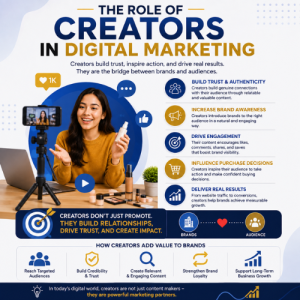
Creator marketing can help businesses:
- Increase brand awareness
- Reach specific niche audiences
- Generate engagement
- Build credibility
- Introduce products naturally
- Drive website traffic
- Support sales and conversions
The effectiveness of a creator partnership often depends more on audience relevance and trust than simply the number of followers.
Micro-Influencers and Niche Creators
A creator does not necessarily need millions of followers to provide value to a brand.
Their audiences may trust their recommendations because their content feels more personal and relatable.
For businesses targeting specific customer groups, working with several niche creators can sometimes be more effective than relying on one celebrity influencer.
Challenges of the Creator Economy
Despite its opportunities, becoming a successful creator is not always easy.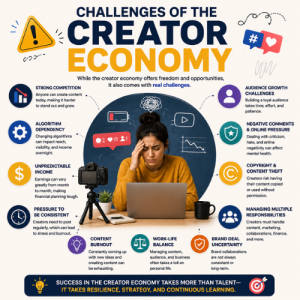
Creators often face:
Strong competition
Changing social media algorithms
Unpredictable income
Pressure to publish consistently
Audience growth challenges
Brand partnership uncertainty
Content burnout
The need to manage multiple business activities
Successful creators therefore need more than creativity. They also need skills in branding, marketing, communication, analytics, business management, and audience development.
The Future of the Influencer and Creator Economy
The creator economy is expected to continue evolving as social platforms, artificial intelligence, video formats, and digital commerce develop.
Creators are increasingly becoming entrepreneurs rather than simply content producers. Many are building complete businesses around their personal brands, combining content with products, services, communities, and educational resources.
For brands, creator partnerships are also becoming a valuable part of digital marketing because they provide opportunities to reach highly targeted audiences through relatable and engaging content.
Conclusion
The Influencer and Creator Economy represents a major shift in how individuals build careers and how businesses connect with consumers. Anyone with valuable knowledge, creativity, or a unique perspective can potentially build an audience and turn that audience into a sustainable business.
For creators, the key is to focus on authentic content, consistent communication, and a clearly defined niche. For businesses, the focus should be on finding creators whose audiences genuinely match their target customers.
As digital platforms continue to evolve, the relationship between creators, audiences, and brands will remain an important part of the future of digital marketing.